
Hail Damage Roof Repair in San Antonio: damage you can see, and damage you can't.
Hill Country hailstorms bruise shingles that look fine from the driveway. We climb every slope, document every impact, and give you an honest read on repair vs. replacement, no upsell, no guesswork.
What hail actually does to a roof
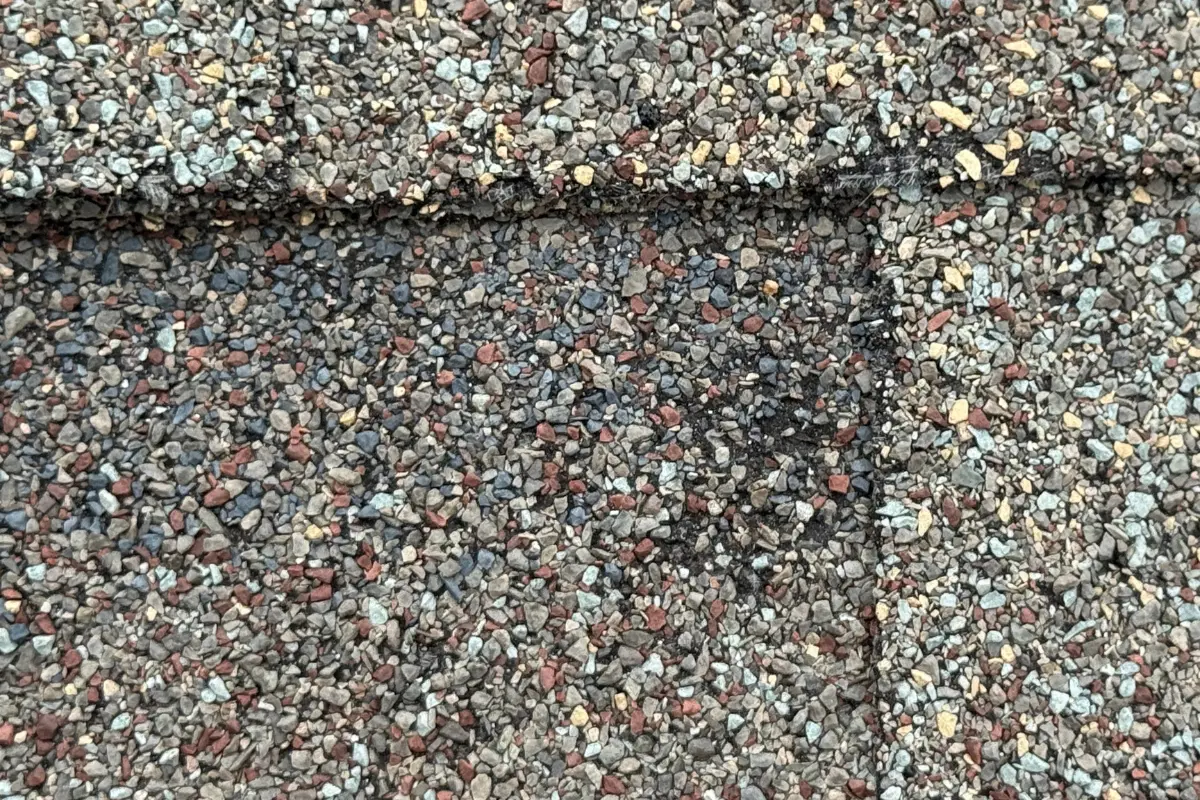
Hail doesn't have to punch a hole in your roof to cause a real problem. Golf-ball and quarter-size hail bruises the asphalt mat under the granules, cracking the shingle's waterproof layer without ever showing up as an obvious hole. From the ground, or even from a quick look up a ladder, the roof can look completely normal.
That bruising is the problem. Once the mat is fractured, UV and heat go to work on the exposed spot, and within months, sometimes within one or two hard rains, it turns into a leak. This is why "my roof looks fine" and "my roof took hail damage" aren't contradictory statements; they're usually both true at the same time.
Central Texas sits in one of the more active hail corridors in the country. Boerne, Bulverde, Stone Oak, and the Hill Country ridge line get hit by supercells that drop golf-ball to baseball-size hail most springs. We've inspected roofs after nearly every major hail event in this region for years, and we know exactly what to look for and where.
How to tell if your roof took a hit
- A hailstorm hit your ZIP code in the last 12 months, even if you didn't notice damage at the time
- Dented gutters, downspouts, or window screens, a strong early sign the roof took the same hit
- Soft, dark, or "bruised" spots on shingles when you press them gently
- Granules collecting in gutters or at downspout outlets after a storm
- Cracked or chipped tiles on a tile roof (tile bruises differently but with the same underlying risk)
- Small dents in soft metal: vents, flashing, AC housing, or a metal roof panel
We photograph and measure every hit, not just tell you "yeah, that's hail."
A hail claim lives or dies on documentation. We climb every slope of the roof, not just the side facing the street, because hail direction and roof pitch change where the worst damage lands. Every impact gets a dated photo, and we count and mark impacts per test square so the pattern is objective, not a verbal opinion.
We're not the ones who decide what your insurance covers. That's between you and your carrier, and Texas law keeps roofing contractors out of that conversation. What we hand you is a clear, honest record of exactly what's on your roof.
Full-slope inspection
Every roof plane walked and photographed, not just a driveway glance.
Impact counts per test square
A clear, measured record, so your documentation speaks in objective terms.
Soft metal cross-check
Gutters, vents, and flashing checked for matching dents. Hail damage rarely shows up in only one place.
How it goes, start to finish.
- 01
Free hail inspection
We walk every slope, check soft metals, and photograph impacts with measurements.
- 02
Written damage report
Dated photos, impact counts per test square, and a plain-language summary you can keep or share.
- 03
Repair or replace, your call
We'll tell you honestly whether it's a spot repair or if the field of the roof needs a full replacement.
- 04
Scheduled work
Once you decide, we schedule the fix, often within the week.
What hail repair typically runs
Spot repairs for isolated hail damage in the San Antonio area usually run $350 to $1,800. If the hail bruised shingles across the whole field of the roof, a full replacement is often the more honest recommendation, typically $8,000 to $22,000 depending on size and material.
We don't estimate hail damage over the phone. Every hailstorm hits differently, and the only honest number comes after we've actually been on the roof.
What affects the number
- Number and concentration of impacts across the roof
- Whether the damage is isolated to one slope or spread across the whole roof
- Shingle age, since older shingles are more brittle and bruise deeper from the same hail size
- Whether soft metals (gutters, flashing, vents) also need replacement
- Roof material, since asphalt, metal, and tile all take hail differently and price differently to fix
How big does hail have to be to damage a roof?
Roughly quarter size and up commonly bruises asphalt shingles, but size alone doesn't decide it.
An older, brittle, sun-baked roof can be damaged by smaller stones than a newer one, and wind direction during the storm concentrates impacts on particular slopes while leaving others almost untouched.
Soft metals around the house are the easiest ground-level tell. Gutters, downspouts, vents, window screens, and AC fins dent at smaller hail sizes than asphalt shingles do, so check those before you decide the roof is fine.
Small hail on a newer roof frequently causes nothing at all, and we say so when that's what we find. A free inspection is the only way to know which side of that line your roof is on.
Do I need a whole new roof after hail, or can it just be repaired?
Often it can be repaired, and the deciding factor is countable rather than a judgment call: whether the bruising sits in one area or is scattered across every slope.
A few impacts on one slope is a spot repair. Spot repairs for isolated hail damage in our area usually run $350 to $1,800. Once the bruising is spread across every slope, patching individual shingles doesn't restore a watertight roof, and a full replacement is the honest recommendation.
A full replacement for a typical home in the San Antonio area typically runs $8,000 to $22,000 depending on size and material. That is a big jump, which is why we count and mark impacts before we recommend it.
Plenty of hail-struck roofs need a repair, not a replacement. A roofer who finds a total loss on every hail call is telling on themselves. We would rather book a small repair and keep your trust than invent a roof sale.
Questions we hear often.
How do I know if my roof has hail damage if I can't see any holes?
Most hail damage doesn't look like a hole. It looks like bruised, discolored, or dented shingles, and it's often invisible unless you're standing on the roof. If a hailstorm hit your area in the last year, a free inspection is the only reliable way to know.
How long after a hailstorm can damage still be found?
Hail damage doesn't heal or disappear. It just sits there getting worse. We regularly find hail damage on roofs from storms a year or more in the past. If you know a storm came through and never had it checked, it's worth a look.
Will you tell me I need a full replacement if I really only need a repair?
No. We document exactly what we find and tell you honestly whether it's a spot repair or something bigger. Talking people into work they don't need is how a local company loses its reputation.
Can hail damage a metal roof?
Yes, though it shows up differently, usually as small dents rather than bruising. Standing seam and heavier-gauge panels resist hail better than exposed-fastener panels, but any metal roof can dent from large enough hail.
Do I need to be home for the inspection?
No. We just need access to the roof and, ideally, the attic. Many customers schedule inspections while they're at work.
Where we do this work
Same crew, same standard, across San Antonio and the Hill Country.
Local, Documented, and Code-Compliant
Reviewed by Jose Puente, Civil Engineer (20+ yrs) & Owner.
Office: 10615 Perrin Beitel Rd, San Antonio, TX 78217.
Related services
Roof Repair
Fast, honest roof repair in San Antonio & the Hill Country. Leaks, missing shingles, hail and wind damage, fixed right. Free inspection, call (830) 443-3001.
See roof repairRoof Inspection
Free roof inspections in San Antonio & Hill Country. Storm damage, pre-purchase, and annual check-ups with photo report. No pressure. Call (830) 443-3001.
See roof inspectionProperty Insurance Claims
Storm damage documentation for roof insurance claims in San Antonio and the Hill Country. Free photo reports and measurements. Call (830) 443-3001 today.
See property insurance claimsLet's talk about your hail damage roof repair.
Free inspection, honest report, no pressure. Talk to Brenda 24/7 and we'll get you on the schedule this week.