
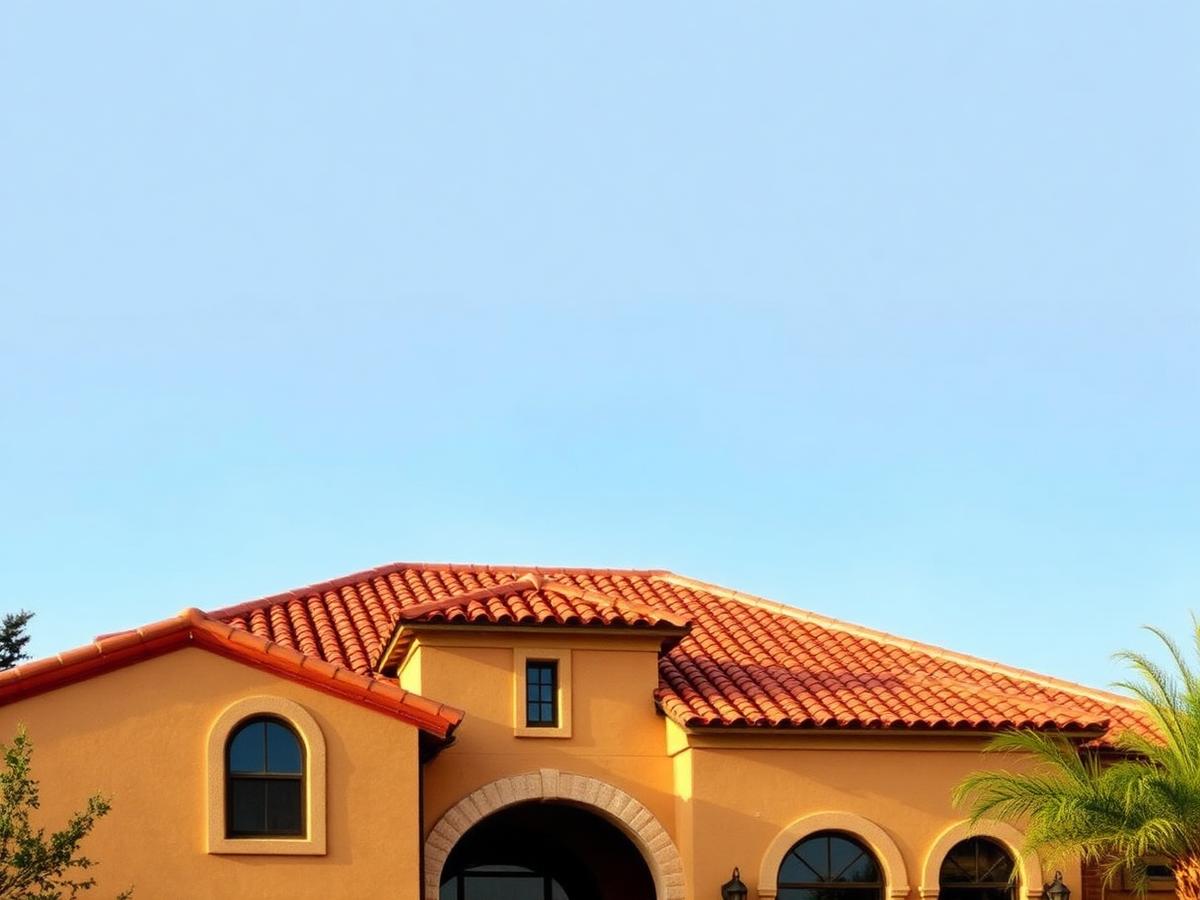
Tile Roofing in San Antonio: clay and concrete, done by crews who've done it before.
Tile is unforgiving of a bad installer. We've been laying and repairing tile roofs across San Antonio's Southwest-style neighborhoods for years, and we know where the details actually matter.
Tile roofing, explained
Tile roofs are common across San Antonio for a reason: they fit the architecture, they handle our heat, and a properly installed tile roof will outlast most of the homes underneath them. The underlayment beneath the tile is the actual waterproofing layer — the tile is the wear-resistant, UV-blocking shell that protects it.
This is why most tile roof problems in this area are actually underlayment problems. The tiles look fine from the driveway; meanwhile the felt or synthetic under them has aged out and is letting water through at every valley and penetration. The fix — a re-lay — pulls the existing tile up, replaces the underlayment and flashing, and re-installs the tile on a fresh, warrantied system.
When tile roofs need attention
- Underlayment age approaching 20–25 years, even if tiles look fine
- Slipped, cracked, or missing tiles after storms
- Flashing failures at valleys, sidewalls, or chimneys
- Interior leaks with no obvious tile damage from below
- Efflorescence or white streaking on the tile surface
Three very different jobs.
Being clear about which project you actually need saves thousands. Here's how we describe each:
Repair
Individual tiles, sections of flashing, or a specific problem area. Best when the field of the roof and underlayment are still sound.
Re-lay (re-underlayment)
The move for a 20+ year old tile roof with tired underlayment. Existing tile is carefully removed, underlayment and flashing replaced, tile reinstalled — often with 10–20% new tile mixed in for breakage.
Full new install
New construction, or when existing tile is too brittle to reuse. Fresh underlayment, batten system, and new clay or concrete tile.
How it goes, start to finish.
- 01
On-site inspection
We assess both tile condition and underlayment age; tile-only inspections miss the actual problem.
- 02
Written proposal
We spell out re-lay vs. repair vs. replacement clearly, with what each does and doesn't fix.
- 03
Tile removal & staging
For re-lays, tile is stacked carefully on the roof to minimize breakage — we plan for 10–15% loss and price replacements upfront.
- 04
Underlayment & flashing
New synthetic underlayment, all new metal flashing at valleys and penetrations, batten rework as needed.
- 05
Re-install & finish
Original tile reinstalled with matching replacement pieces, ridge and hip caps mortared or mechanically fastened per code.
What tile work runs
Repairs typically range $500–$3,500. A re-lay on a mid-sized home runs $18,000–$40,000, depending on tile type and complexity. Full new tile installs on complex homes can go higher.
Tile pricing varies more than any other roofing material we install. On-site inspection is the only honest way to quote it.
What affects the number
- Tile type — concrete tile is significantly less expensive than authentic clay
- Roof complexity — tile is labor-intensive; hips, valleys, and dormers multiply hours
- Percentage of tile breakage during removal (older brittle tile breaks more)
- Underlayment upgrade — standard synthetic vs. high-temp premium options
- Whether flashing needs to be reworked or replaced entirely
Is a tile roof worth it in San Antonio?
Worth it if the house was built for tile and you intend to keep it for the long haul. Tile outlasts asphalt by decades, holds up to sun better than anything else we install, and suits the Spanish and Mediterranean homes all over this city.
The costs are real. A re-lay on a mid sized home runs $18,000 to $40,000, the work takes longer because every tile is handled twice, and the roof structure has to be able to carry the weight.
The case against putting tile on a home that never had it: you are paying for framing evaluation, added weight, and slower labor to get a look. If the budget is tight, a good shingle roof on that same house is the smarter buy.
One thing homeowners often miss is that tile is the armor, not the waterproofing. The underlayment beneath it is what keeps water out, and it wears out well before the tile does. Most tile roofs we work on need a re-lay, not new tile.
Can a tile roof survive Texas hail?
It survives most hail and cracks under the worst of it. Tile shrugs off small hail far better than asphalt, but large stones can crack or shatter individual pieces, and a cracked tile becomes a leak path.
The good news is that tile damage is usually local. Broken pieces get swapped out one at a time, and repairs typically run $500 to $3,500 rather than a whole roof.
After a hail event, resist the urge to go look yourself. Walking a tile roof cracks tile, and we see more homeowner footprint damage than hail damage on some calls. Let someone who knows where to step do the walk.
If the storm was severe, have the underlayment checked too, not just the tile. Impact can bruise what is underneath, and that is the layer that decides whether your ceiling stays dry.
Questions we hear often.
Can I walk on my tile roof?
Please don't. Tile cracks under concentrated point loads, and cracked tiles turn into leaks. Call us instead — walking a tile roof safely takes technique and specific weight distribution.
How long does a tile re-lay take?
Typically 5–10 working days depending on home size and tile type. It's slower than a shingle replacement because every tile is handled twice.
Can you match my existing tile?
Usually yes for concrete tile, and harder for older clay tile, where exact color and profile matching can be difficult. On clay we often place replacements on less-visible slopes and use originals on street-facing planes.
Is clay or concrete tile better?
Clay is longer-lasting (60–100 years vs. 40–50 for concrete), more color-stable, and more expensive. Concrete is more affordable and heavier. Both work well in San Antonio; the right choice depends on your budget and home style.
Where we do this work
Same crew, same standard, across San Antonio and the Hill Country.
Local, Documented, and Code-Compliant
Reviewed by Jose Puente, Civil Engineer (20+ yrs) & Owner.
Office: 10615 Perrin Beitel Rd, San Antonio, TX 78217.
Related services
Roof Replacement
Complete roof replacement in San Antonio & Hill Country. Owens Corning & GAF certified, tear-off and dry-in same day. Free estimate, call (830) 443-3001.
See roof replacementRoof Inspection
Free roof inspections in San Antonio & Hill Country. Storm damage, pre-purchase, and annual check-ups with photo report. No pressure. Call (830) 443-3001.
See roof inspectionRoof Repair
Fast, honest roof repair in San Antonio & the Hill Country. Leaks, missing shingles, hail and wind damage, fixed right. Free inspection, call (830) 443-3001.
See roof repairLet's talk about your tile roofing.
Free inspection, honest report, no pressure. Talk to Brenda 24/7 and we'll get you on the schedule this week.